What Bathroom Countertops Asheville Vanities Actually Require
Most people plan a bathroom counter the way they plan a kitchen counter, just smaller. That instinct is what leads to the two most common regrets in a vanity project: paying slab prices for a top that could have come from a remnant, and picking a sink style after the stone has already been cut. A vanity is a different problem with different constraints, and treating it as a miniature kitchen is how those constraints get missed.
The good news is that the smaller footprint gives you room to be ambitious. Stone that would blow the budget across ten feet of kitchen run becomes affordable across five feet of vanity. That is why the bathroom countertops Asheville homeowners install are often in nicer material than the kitchen in the same house, and why the decision order matters more than the material shortlist.
Baths are gentler on stone than kitchens
The moisture assumption gets this backwards. People hear “bathroom” and think water damage, then rule out marble and limestone on instinct. In practice a bathroom is the easier environment for natural stone, because the two things that actually destroy a countertop are heat and impact, and a vanity sees almost none of either.
Nobody sets a 400 degree roasting pan on a vanity. Nobody drops a cast iron skillet on one. What a vanity gets is standing water around the faucet base, and a rotating cast of cosmetics, toothpaste, hairspray, and cleaning products. That shifts the risk from cracking and thermal shock to etching and staining, which is a slower and more forgiving category of damage.
Etching is the one to understand, because it gets confused with staining constantly. A stain is something soaking into the stone and darkening it. An etch is an acid eating a dull spot into a polished surface, so the mark is texture rather than color. On calcite based stone (marble, limestone, travertine, onyx) an acidic product will leave a dull patch. In a kitchen that means lemon juice and vinegar. In a bath it means toilet bowl cleaner, certain toners, and anything with glycolic or salicylic acid in it.
That is a real consideration, not a disqualifier. A vanity is small enough to wipe down daily, and honed finishes hide etching far better than polished ones because there is less gloss to interrupt. Plenty of primary baths across Buncombe County run honed marble for exactly this reason.
The sink decision comes before the stone decision
This is the sequencing error worth fixing. Fabricators cut the sink opening during fabrication, not during installation, so the sink has to be chosen, and usually physically on hand, before the top is cut. Changing your mind afterwards means a new top.
Three options, and they behave differently:
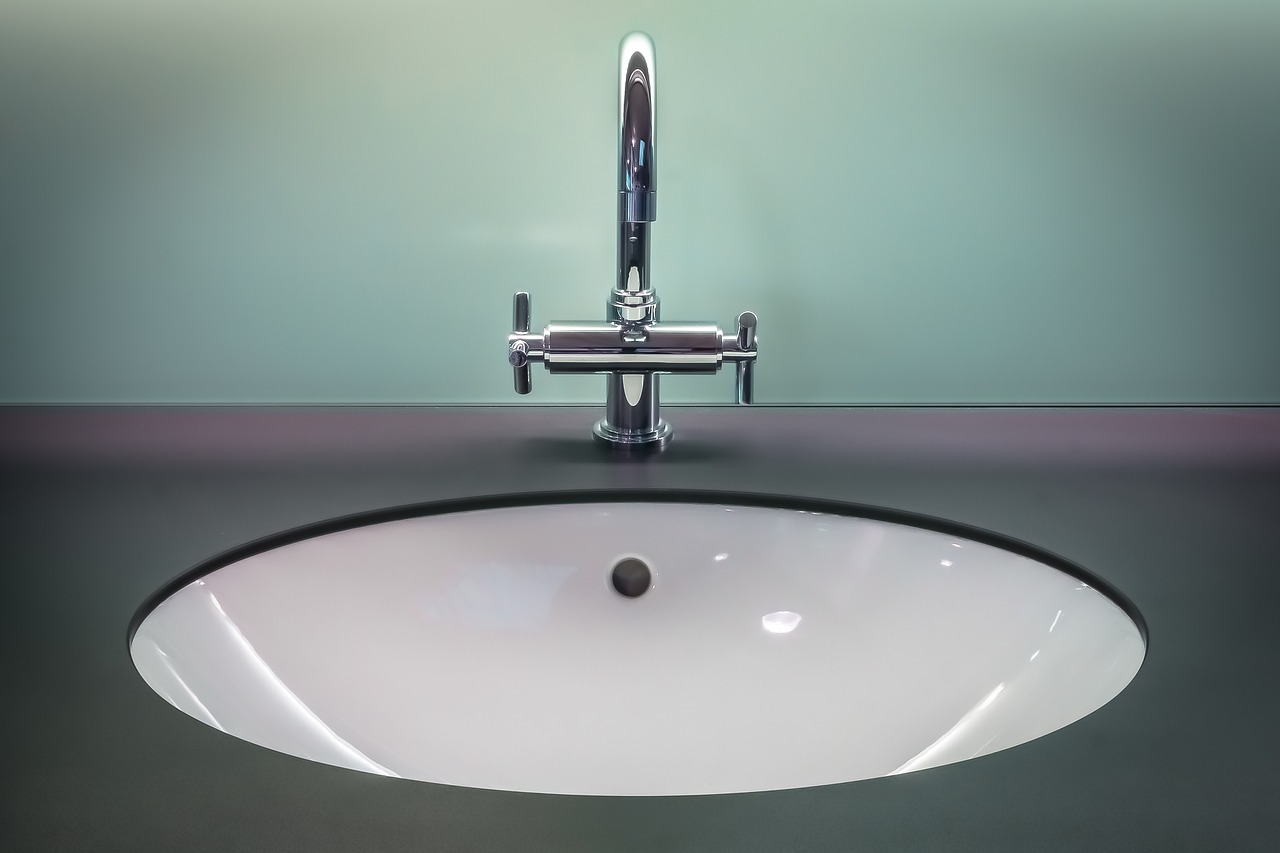
Undermount sinks mount beneath the stone, so the counter edge runs straight into the basin and you can sweep water off the top without catching a rim. It is the default for a reason. It needs a polished inside edge on the cutout, which is part of why the fabrication step exists.
Vessel sinks sit on top of the counter like a bowl. The stone only needs a drain opening and a faucet hole, which makes it the simplest cut, but it changes your ergonomics: the basin adds height, so the vanity cabinet usually has to be shorter to compensate. Retrofitting a vessel onto a standard 36 inch cabinet puts the rim uncomfortably high for most people.
Integrated sinks are formed from the same material as the top, common in quartz and solid surface, with no seam and no rim at all. Easiest to clean, hardest to change later, and not available in natural stone.
If you take one thing from this section: settle the sink first, then choose material, then talk about edges. Doing it in the other order is what generates change orders.
Where remnants change the math
A vanity is typically somewhere between 25 and 60 inches wide and about 22 inches deep. That is small enough to come out of the offcut left over from a kitchen island, which is the single biggest lever on what a bathroom top costs.
Slabs are sold whole. When a fabricator cuts a kitchen out of a slab, the leftover pieces stay in the shop, and those pieces are frequently large enough for a single vanity. Remnant pricing reflects that the material is already paid for, which is how exotic quartzite or a dramatic marble becomes reachable for a powder room.
The tradeoff is selection. You are shopping what happens to be on the rack this month rather than ordering a color from a catalogue, so remnants suit people who are flexible on the exact stone and firm on the budget. For a double vanity the odds drop, because you need a longer continuous piece and matching becomes harder. Single sink vanities and powder rooms are where remnants win most often.
The measurements that catch people out
A few numbers do most of the damage when they get assumed rather than measured.
Standard vanity depth is about 22 inches, against 25 inches for a kitchen counter. Cabinets vary, and older Asheville housing stock varies a lot, so this gets templated rather than guessed.
Faucet drillings are the other one. A single hole faucet, a 4 inch centerset, and an 8 inch widespread all need different holes drilled in different places, and that happens in the shop. Buying the faucet after the top is cut is the same mistake as buying the sink late.
Then there is the backsplash question. A 4 inch stone backsplash matched to the top is the traditional answer and it hides the wall to counter joint, which matters in a house where the walls are not perfectly plumb. The alternative is no stone backsplash at all, running tile or paint straight down to the counter, which looks cleaner and modern but demands a straighter wall and a neat caulk line.
How the materials actually behave in a bath
| Material | Behavior in a bathroom | Maintenance |
|---|---|---|
| Quartz | Non porous, shrugs off cosmetics and toothpaste, consistent color | No sealing needed |
| Marble | Bright and classic, the spa look, etches with acidic products | Wipe acids promptly, seal periodically |
| Granite | Durable and forgiving, busy patterns hide daily use | Seal periodically |
| Quartzite | Marble appearance in a harder natural stone | Seal periodically |
| Soapstone | Non porous, darkens with oiling, soft and scratches | Oil optional, no sealing |
| Porcelain | Very hard, thin profile, UV stable | Essentially none |
Quartz is the low decision cost answer: engineered, non porous, no sealing, and it does not care what you leave on it overnight. Marble is the high reward answer and its main drawback (etching) is far less punishing in a bath than in a kitchen. Quartzite splits the difference at a price. Soapstone is worth a look for a powder room where the soft, dark, matte character is the point.
Asheville specifics worth knowing
The housing stock here spans a wide range, and it changes the job. Montford and the older neighborhoods near downtown have baths that were carved out of, or added to, houses built long before standardized cabinet sizes, so templating there routinely finds walls out of square and depths that are not 22 inches. That is a templating problem, not a material problem, but it rules out anything prefabricated.
Newer construction south of town, around Arden, Fletcher, Skyland, and Biltmore Park, tends to run standard cabinet widths, which makes remnants easier to match and installs faster. Out toward Weaverville, Woodfin, Black Mountain, and Swannanoa you get a mix of both.
Access is the other local variable. Stone is heavy, a double vanity top is awkward, and a narrow stair in an older home or a steep mountain driveway is a genuine logistics factor. Worth mentioning when you get quoted, because it is easier to plan for than to discover on install day.
Common questions
Is marble a mistake in a bathroom? No, and it is a much better bet here than in a kitchen. Bathrooms see less heat and less acid than a kitchen does. Choose a honed finish over polished if you want etching to stay invisible.
Do I need to seal a bathroom vanity top? Natural stone yes, on a periodic basis. Quartz and porcelain no, they are non porous. The water test tells you when: drip water on the stone, and if it darkens within fifteen minutes or so, it is ready for sealer.
Can I reuse my existing sink? Sometimes, if it is in good condition and the new cutout is templated to it. The fabricator generally wants the actual sink in hand rather than a model number, because tolerances between production runs are not always identical.
How long does a vanity top take? Fabrication typically runs shorter than a kitchen because there is less to cut, but the sequence is the same: measure, select, template, fabricate, install. The template step cannot start until the cabinet is in place and level.
The short version
Settle the sink style first, ask about remnants before you assume a budget, and do not let the kitchen rulebook talk you out of the stone you actually want. A vanity is small enough to be the place you spend on material rather than the place you economize.
Need help in Asheville?
Call (828) 690-5980